Total exhaust, zero recirculation
Class II Type B2 Biosafety Cabinets
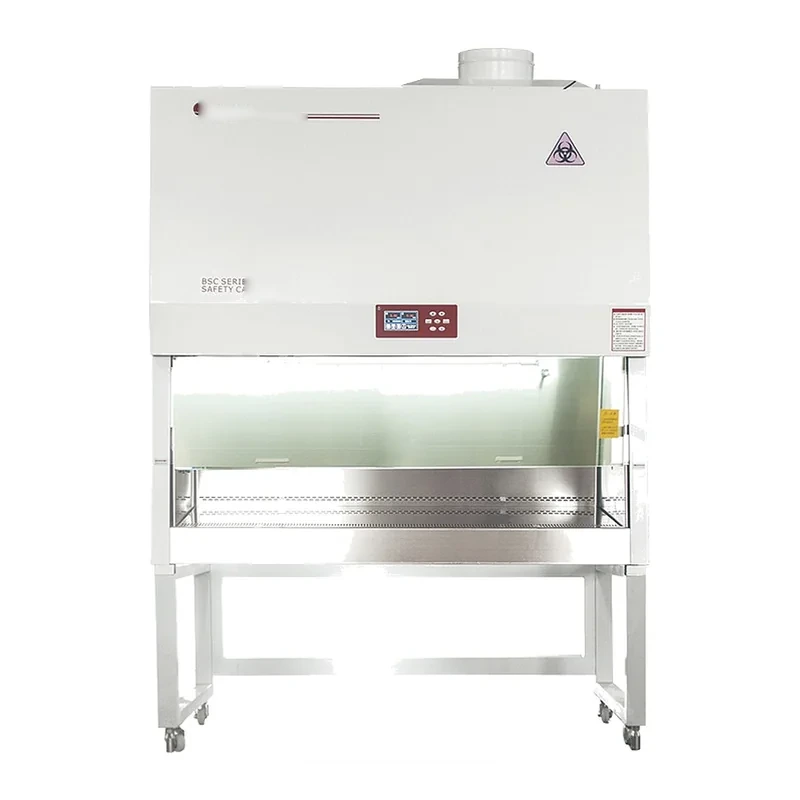
Type B2 is the cabinet you specify when nothing may return to the room. One hundred per cent of the air leaves through a hard duct; there is no recirculation path at all. That is what USP 800 expects for hazardous drug compounding, and what any risk assessment will ask for when the material is cytotoxic, volatile and toxic. The cost is in the building, not the cabinet. A B2 needs a dedicated duct, make-up air matched to the exhaust volume, and a room pressure strategy that keeps the suite negative to the corridor. Plan that before you order, because a B2 cabinet on an undersized duct will alarm continuously and will not hold containment. WSHLab builds B2 cabinets from 4 ft to 6 ft with a pressure sensor that holds total exhaust as the filters load, and a bag-out arrangement that lets you change the exhaust filter without opening the contaminated plenum to the room.
- 3Products
- 0Direct categories
- Technical support
-
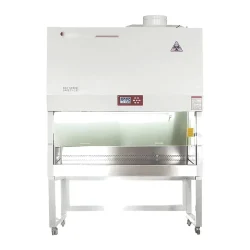
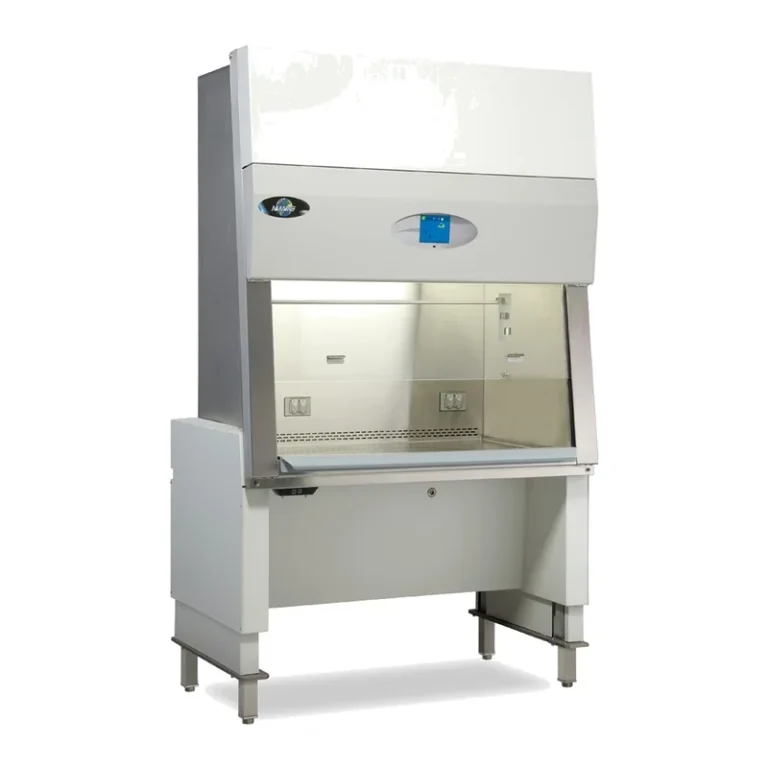
WSHLab B2 Total Exhaust Biosafety Cabinet
- Airflow class
- Class II Type B2 — 100% exhaust, no recirculation
- Downflow velocity
- 0.33 ± 0.025 m/s
- Inflow velocity
- 0.53 ± 0.025 m/s
- Exhaust volume
- 1200 m³/h (4 ft) to 1900 m³/h (6 ft)
Price on request -
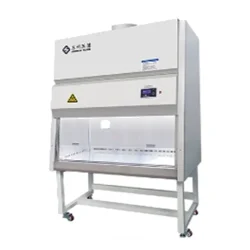
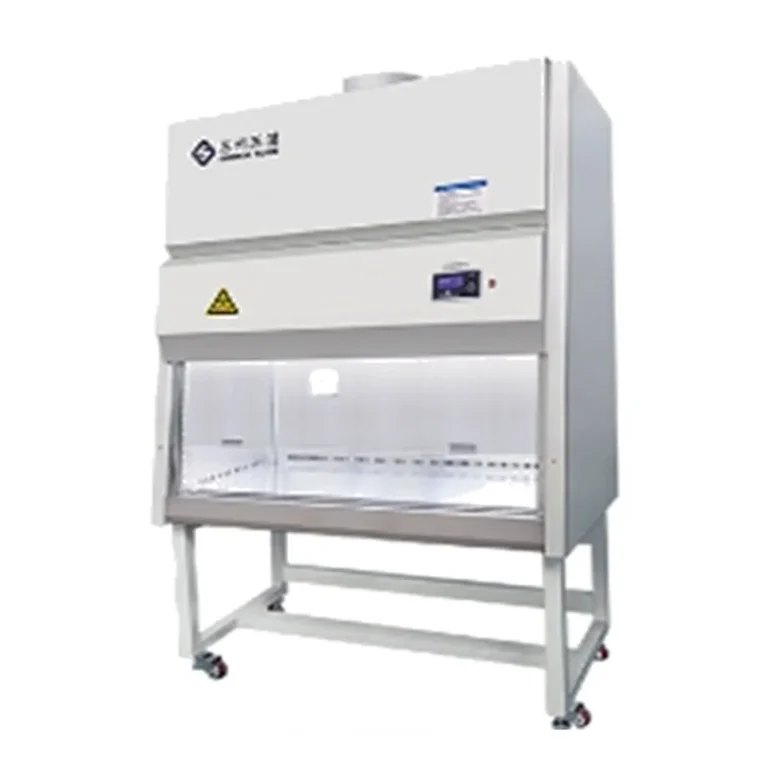
WSHLab B2 Compact Biosafety Cabinet
- Airflow class
- Class II Type B2 — 100% exhaust, no recirculation
- Downflow velocity
- 0.33 ± 0.025 m/s
- Inflow velocity
- 0.53 ± 0.025 m/s
- Exhaust volume
- 1400-1900 m³/h depending on width
Price on request -
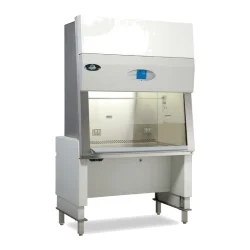
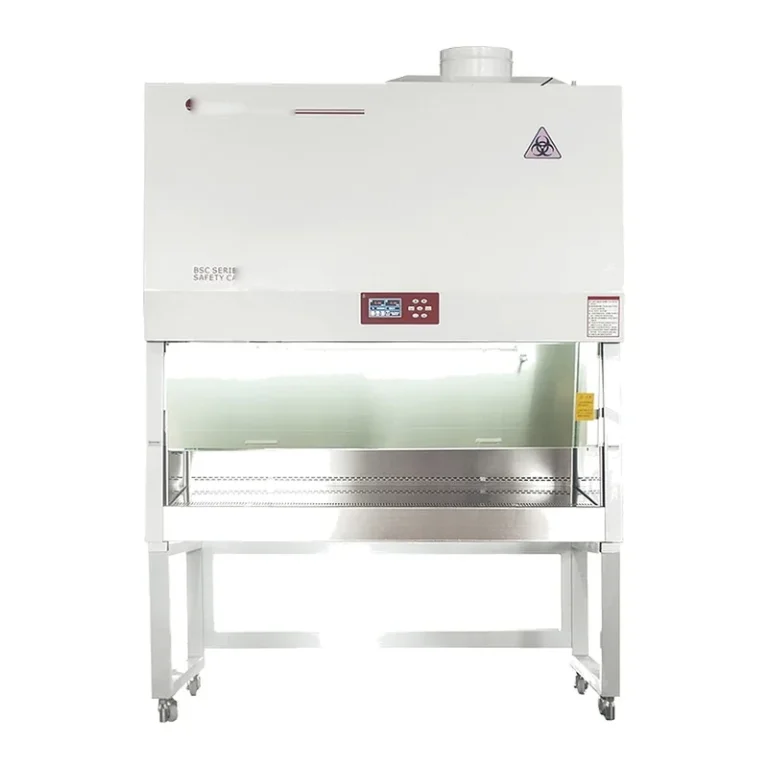
WSHLab B2 Floor-Standing Biosafety Cabinet
- Airflow class
- Class II Type B2 — 100% exhaust, no recirculation
- Downflow velocity
- 0.33 ± 0.025 m/s
- Inflow velocity
- 0.53 ± 0.025 m/s
- Exhaust volume
- 1400 m³/h
Price on request
TECHNICAL DATA
B2 total exhaust architecture
Air enters through the front opening, passes through the supply filter, crosses the work zone and leaves through the exhaust filter into a dedicated duct. There is no return path.
Class II Type B2 Biosafety Cabinets
View ProductWSHLab B2 Floor-Standing Biosafety Cabinet
- Airflow class
- Class II Type B2 — 100% exhaust, no recirculation
- Downflow velocity
- 0.33 ± 0.025 m/s
- Inflow velocity
- 0.53 ± 0.025 m/s
- Exhaust volume
- 1400 m³/h
- Work surface height
- 750 mm
- Filter
- ULPA U15, 99.9995% at 0.12 µm
- Working width
- 4 ft / 1.2 m
- External dimensions
- 1087 × 800 × 2260 mm (W × D × H)
- Internal dimensions
- 980 × 600 × 650 mm (W × D × H)
- Power
- 1100 VA plus 500 W socket load
- Noise
- ≤65 dB(A)
- Certification
- EN 12469 (TÜV), CE, NSF/ANSI 49 configuration
- Width
- 4 ft / 1.2 m
- Work Access Opening
- 8 in / 203 mm
- Electrical
- 115V · 230V
- Performance Standard
- CE · EN-12469 · NSF-ANSI-49 · UL
- Application
- Cytotoxic API Powders
- Control System
- Pressure Sensor
Applications
Typical B2 applications
Anything that must not return to the room.
API powder weighing and dispensing
Volatile toxic chemical handling
Radionuclide work
Aerosol-generating procedures with hazardous agents
PERFORMANCE & SELECTION
Total exhaust, and why it is not negotiable
Any recirculation would return cytotoxic particles over the operator's hands and into the room. B2 removes that path entirely.
- 100% of the air leaves through the exhaust ULPA filter and the duct
- No supply-side recirculation
- Negative pressure plenum with bag-out filter access
- Pressure sensor and duct static alarm
CONFIGURATION & COMPATIBILITY
What the duct has to do
The duct is part of the containment system. Undersized or unstable duct pressure is the most common reason a B2 cabinet fails its field certification.
- Dedicated duct sized to the declared exhaust volume
- Make-up air matched to the exhaust, or the room goes negative
- Duct pressure stable at part-load, not just at design flow
- Discharge above the roofline, away from air intakes

IDENTIFICATION & TRACEABILITY
Clear Product Identification & Specification
Product names, model numbers, SKUs and option identifiers keep quotations, orders and internal records aligned.
- Product and model identification
- Option-specific SKU information
- Consistent quotation specifications
PRODUCT IDENTIFICATIONClass II Type B2 Biosafety Cabinets
- Catalog
- Safety & compliance
- Products
- 3
- Selection
- Specification-led
Traceability
Traceable Supply & Quality Inspection
Documentation and inspection requirements are confirmed against the selected product and order.
- Product identification records
- Pre-delivery checks
- Documents available on request

Quality system
Testing specific to B2
B2 cabinets are tested for total exhaust as well as for inflow and downflow.
Exhaust volume measured at the duct connection
Duct static alarm verified across the operating range
PAO scan of supply and exhaust filter seals
Bag-out port integrity check
Why WSHLab
Why cytotoxic suites specify WSHLab B2
Containment is only as good as the duct, the seal and the alarm logic. All three are specified together here.
100% total exhaust, no recirculation
ULPA U15 supply and exhaust filters, 99.9995% at 0.12 µm
Pressure sensor with duct static alarm
Bag-out exhaust filter access
304 stainless steel work zone, coved corners
NSF/ANSI 49, UL 1805/586 and EN 12469 configurations
OPTIONS & SPECIFICATIONS
Class II Type B2 Biosafety Cabinets Options & Specifications
Choose the format that suits your application, workload and handling requirements.
100% external exhaust
Cytotoxic drugs and USP 800
Hard duct and make-up air
Pressure-based airflow control
Decommissioning and bag-out
| Type | Capacity / Option | Material / Specification | Suitable Application | Storage / Handling |
|---|---|---|---|---|
| 100% external exhaust | By selected product | Product-specific configuration | Confirm with our team | Follow product guidance |
| Cytotoxic drugs and USP 800 | By selected product | Product-specific configuration | Confirm with our team | Follow product guidance |
| Hard duct and make-up air | By selected product | Product-specific configuration | Confirm with our team | Follow product guidance |
| Pressure-based airflow control | By selected product | Product-specific configuration | Confirm with our team | Follow product guidance |
| Decommissioning and bag-out | By selected product | Product-specific configuration | Confirm with our team | Follow product guidance |
Delivery and site
Class II Type B2 Biosafety Cabinets Handling & Care Guide
Follow the product manual and site procedures for safe installation, use and maintenance.
- 01
Check Product & Accessories
Confirm model, options and supplied components.
- 02
Review Product Documentation
Read installation and safety instructions before use.
- 03
Prepare the Working Environment
Confirm space, utilities and operating conditions.
- 04
Plan Routine Care
Follow cleaning, inspection and maintenance guidance.

RECOMMENDATIONS
Related Products
Products frequently compared within this catalog.
GALLERY
Applications & Facilities Gallery
VIDEOS
Manufacturing & Quality Process
Category video library
Add category-specific video covers, titles, durations and video URLs in the Videos ACF section.
QUESTIONS & ANSWERS
Class II Type B2 Biosafety Cabinets: frequently asked questions
The questions buyers ask most often when specifying Class II Type B2 Biosafety Cabinets, answered by our technical team.
Is a Type B2 cabinet required for USP 800?
USP 800 requires external venting for hazardous drug compounding, and a Class II Type B2 cabinet is the usual way to meet it. A Type A2 with a canopy connection is accepted in some designs, but B2 is the unambiguous specification.
How much make-up air does a B2 cabinet need?
Match the make-up air to the exhaust volume on the datasheet — 1200 m³/h for a 4 ft cabinet and up to 1900 m³/h for a 6 ft unit in our range. The room must remain negative to the corridor at that flow.
Can the exhaust filter be changed safely?
Yes. The filter is accessed through a bag-out port on the contaminated side, so the plenum is not opened to the room. Decontaminate the cabinet before the service visit.
GET A QUOTATION
Plan a B2 installation
Send the room drawing and the duct route. We will confirm the exhaust volume, the make-up air you need and the cabinet size that fits the room.