Personnel and environmental protection, no product protection
Class I Biosafety Cabinets
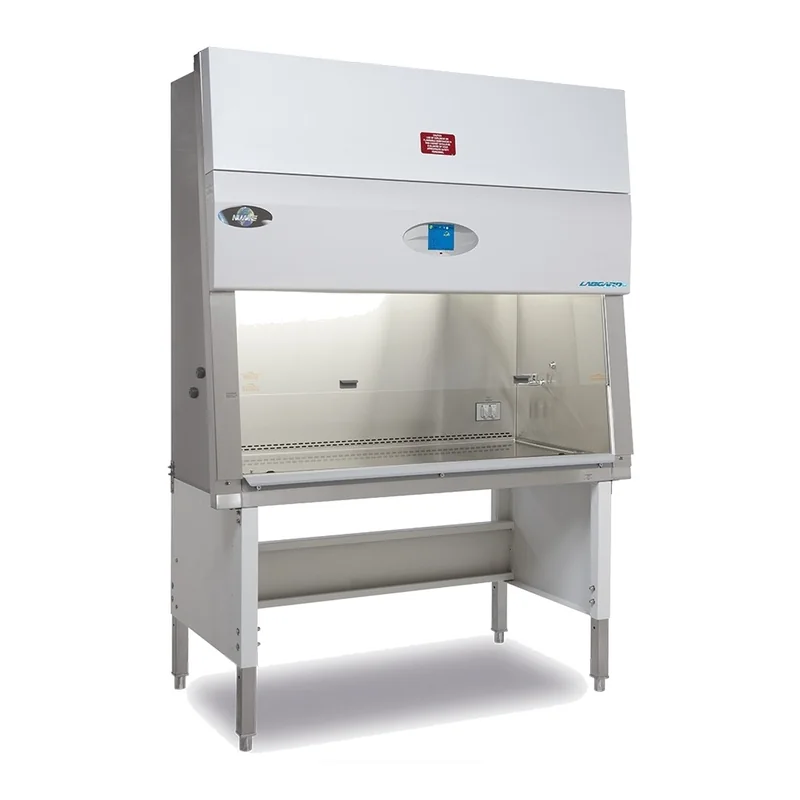
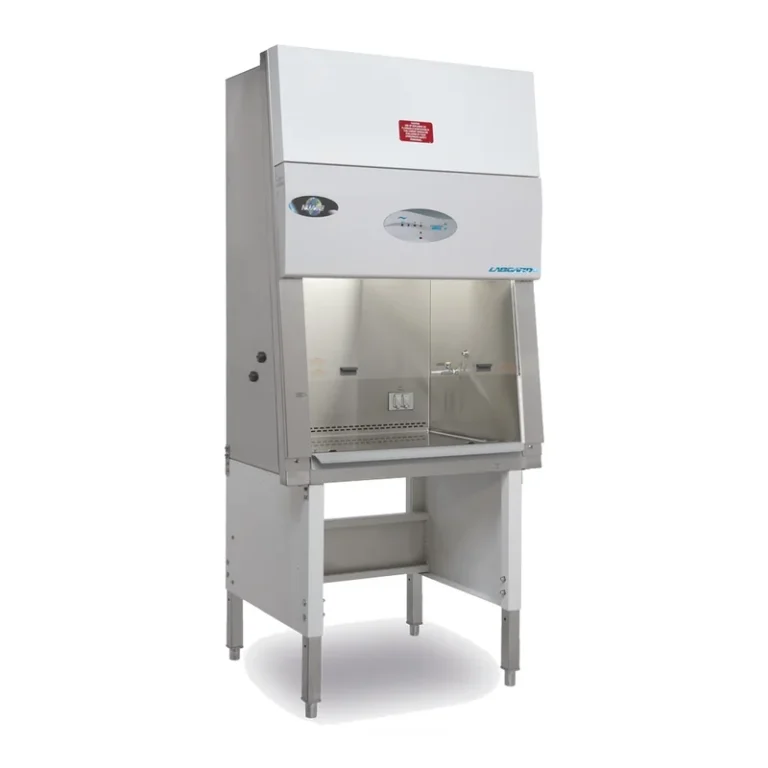
A Class I cabinet is the honest option when you need to keep the operator and the room safe but the sample does not need a sterile zone. Room air is drawn in through the front opening, passes over the work surface and leaves through a HEPA or ULPA exhaust filter — nothing is recirculated back over your work. That makes it a good fit for low-risk microbiology, weighing and powder handling, and for teaching laboratories where a Class II cabinet would be over-specified and under-maintained. It is not a substitute for a Class II cabinet when you need product protection: there is no downflow, so an open agar plate is exposed to room air. WSHLab builds Class I cabinets on the same plenum and blower platform as our Class II range, so the service parts, filter class and documentation are identical across your laboratory.
- 1Products
- 0Direct categories
- Technical support
-
WSHLab Class I Biosafety Cabinet
- Airflow class
- Class I — open front, single-pass, 100% exhaust
- Inflow velocity
- 0.7 m/s (EN 12469) / 0.38 m/s minimum (NSF/ANSI 49)
- Filter
- HEPA H14, 99.995% at MPPS, exhaust path
- Working widths
- 3 ft / 0.9 m, 4 ft / 1.2 m
Price on request
TECHNICAL DATA
Class I architecture
A single blower pulls room air through the front opening, across the work surface and through the exhaust filter. The cabinet runs under negative pressure, so any leak moves air inward rather than outward.
Class I Biosafety Cabinets
View ProductWSHLab Class I Biosafety Cabinet
- Airflow class
- Class I — open front, single-pass, 100% exhaust
- Inflow velocity
- 0.7 m/s (EN 12469) / 0.38 m/s minimum (NSF/ANSI 49)
- Filter
- HEPA H14, 99.995% at MPPS, exhaust path
- Working widths
- 3 ft / 0.9 m, 4 ft / 1.2 m
- External dimensions
- 1000-1300 × 750 × 1250 mm (W × D × H, cabinet only)
- Internal dimensions
- 900-1200 × 600 × 700 mm (W × D × H)
- Exhaust connection
- 150 mm or 200 mm collar, hard duct recommended
- Work zone
- 304 stainless steel, coved corners
- Power
- 500 VA maximum, 230V or 115V single phase
- Noise
- ≤65 dB(A)
- Illumination
- ≥800 lx at the work surface
- Electrical safety
- IEC 61010-1; EMC IEC 61326
- Width
- 3 ft / 0.9 m · 4 ft / 1.2 m
- Work Access Opening
- 12 in / 305 mm · 8 in / 203 mm
- Electrical
- 115V · 230V
- Performance Standard
- CE · EN-12469 · NSF-ANSI-49 · UKCA
- Application
- Multi-purpose · Volatile Chemical Work
- Control System
- Single Airflow Sensor
- Shipping Options
- QuickShip
Applications
Typical Class I applications
Containment where the sample itself does not need protection.
Powder weighing and grinding
Teaching and training laboratories
Waste handling and decontamination stations
PERFORMANCE & SELECTION
When Class I is the right answer
If the risk sits with the operator and the environment rather than the sample, Class I gives you containment without the cost and complexity of a Class II cabinet.
- Low-risk biological agents under containment level 2
- Powder weighing and sample preparation where the product is not sterile
- Teaching and training laboratories with tight budgets
- Backup containment where a Class II cabinet is not available

CONFIGURATION & COMPATIBILITY
What you give up
Class I has no HEPA-filtered downflow over the work surface, so it cannot protect an open sample from airborne contamination.
- No ISO Class 5 work zone over the sample
- Not suitable for cell culture, media preparation or sterility testing
- Not accepted for USP 797/800 compounding

IDENTIFICATION & TRACEABILITY
Clear Product Identification & Specification
Product names, model numbers, SKUs and option identifiers keep quotations, orders and internal records aligned.
- Product and model identification
- Option-specific SKU information
- Consistent quotation specifications
PRODUCT IDENTIFICATIONClass I Biosafety Cabinets
- Catalog
- Safety & compliance
- Products
- 1
- Selection
- Specification-led
Traceability
Traceable Supply & Quality Inspection
Documentation and inspection requirements are confirmed against the selected product and order.
- Product identification records
- Pre-delivery checks
- Documents available on request

Quality system
Testing and documentation
Each unit is airflow-tested and filter-scanned before shipment.
Face velocity measured across the front opening
Filter integrity scan before packing
Noise and illumination recorded
Test report tied to the cabinet serial number
Why WSHLab
Where a Class I cabinet earns its place
It is the lowest-cost route to operator protection, and the simplest cabinet to keep in service: one filter, one blower, no downflow plenum to balance.
Open front with inward airflow and negative pressure body
HEPA H14 or ULPA U15 exhaust filter
304 stainless steel work surface
Low noise and low power compared with a Class II cabinet
Annual field certification only — no sash interlock to maintain
OPTIONS & SPECIFICATIONS
Class I Biosafety Cabinets Options & Specifications
Choose the format that suits your application, workload and handling requirements.
Open front
inward airflow
Low-risk agents and powders
No sample protection
Simple
robust
low service cost
| Type | Capacity / Option | Material / Specification | Suitable Application | Storage / Handling |
|---|---|---|---|---|
| Open front | By selected product | Product-specific configuration | Confirm with our team | Follow product guidance |
| inward airflow | By selected product | Product-specific configuration | Confirm with our team | Follow product guidance |
| Low-risk agents and powders | By selected product | Product-specific configuration | Confirm with our team | Follow product guidance |
| No sample protection | By selected product | Product-specific configuration | Confirm with our team | Follow product guidance |
| Simple | By selected product | Product-specific configuration | Confirm with our team | Follow product guidance |
| robust | By selected product | Product-specific configuration | Confirm with our team | Follow product guidance |
| low service cost | By selected product | Product-specific configuration | Confirm with our team | Follow product guidance |
Delivery and site
Class I Biosafety Cabinets Handling & Care Guide
Follow the product manual and site procedures for safe installation, use and maintenance.
- 01
Check Product & Accessories
Confirm model, options and supplied components.
- 02
Review Product Documentation
Read installation and safety instructions before use.
- 03
Prepare the Working Environment
Confirm space, utilities and operating conditions.
- 04
Plan Routine Care
Follow cleaning, inspection and maintenance guidance.

RECOMMENDATIONS
Related Products
Products frequently compared within this catalog.
GALLERY
Applications & Facilities Gallery
VIDEOS
Manufacturing & Quality Process
Category video library
Add category-specific video covers, titles, durations and video URLs in the Videos ACF section.
QUESTIONS & ANSWERS
Class I Biosafety Cabinets: frequently asked questions
The questions buyers ask most often when specifying Class I Biosafety Cabinets, answered by our technical team.
Is a Class I cabinet suitable for cell culture?
No. Class I protects the operator and the environment but does not provide a sterile downflow over the work surface, so an open culture is exposed to room air. Use a Class II Type A2 cabinet for cell culture.
Can a Class I cabinet be ducted outside?
It can exhaust through a HEPA filter back into the room, or be connected to a duct where local rules require external discharge. The exhaust volume is low, so the duct and make-up air requirement is modest.
GET A QUOTATION
Talk to us about Class I containment
Tell us the agent, the process and whether the exhaust may return to the room. We will confirm whether Class I is sufficient or whether you need a Class II cabinet.