Pharmaceutical chemistry — low-temperature drying of intermediates and extracts
Below the decomposition window, no oxidation skin
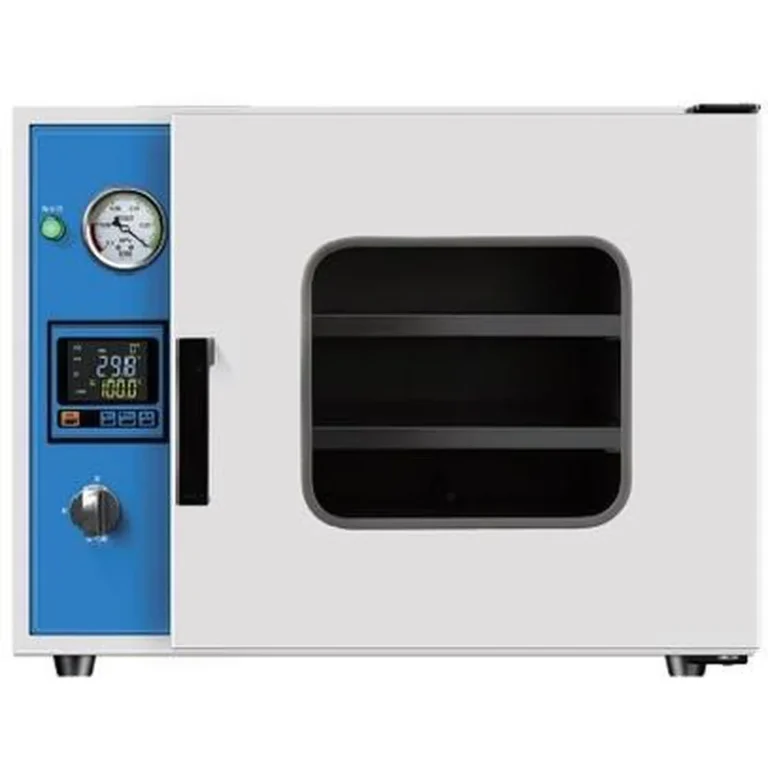
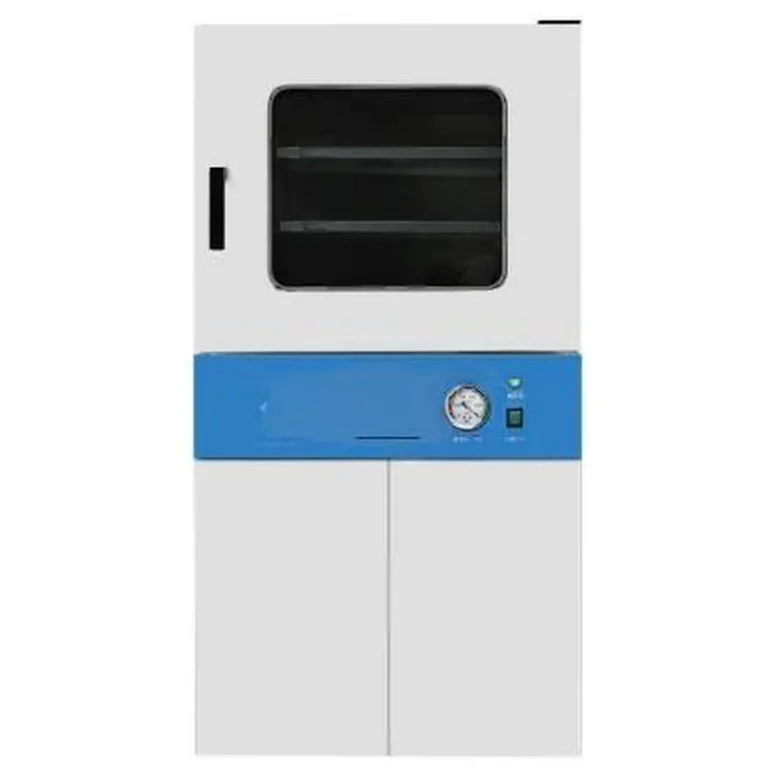
A vacuum drying oven does with pressure what a conventional oven does with temperature. Pull the chamber below 133 Pa and solvents boil at a fraction of their atmospheric boiling point — so a heat-sensitive extract dries at 40°C instead of degrading at 100°C. Under vacuum, powders stay put, oxygen cannot oxidise what it cannot reach, and solvent vapours leave through the pump instead of your samples' neighbours. WSHLab builds the RZF bench top vacuum oven (20L to 210L, horizontal) and the RZFL vertical vacuum oven (50L to 210L, floor-standing). Both hold <133 Pa with a silicone seal and wrap-around heating, run RT+10°C to 250°C, and carry a digital vacuum gauge on the control panel. A nitrogen purge port is standard, turning the chamber into a vacuum nitrogen oven for inert-atmosphere work. The vacuum heat treatment oven principle is simple; keeping it sealed for years is the hard part. That is why we use a wrap-around heater band instead of point elements, a thick silicone gasket, and a double-layer glass door so you can observe a run without breaking vacuum.
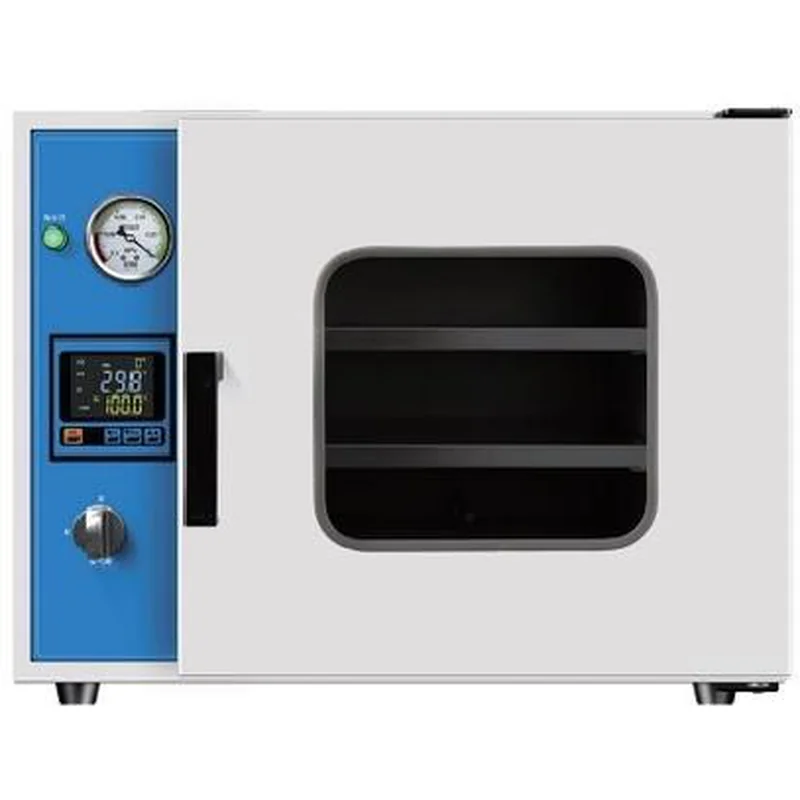
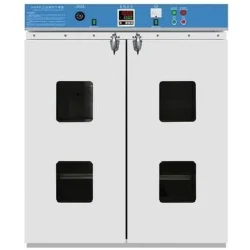
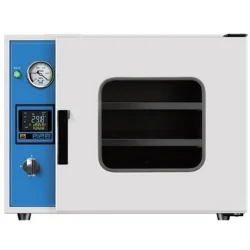
A sealed stainless chamber, a wrap-around heater band, a thick silicone gasket and a double-layer glass door — engineered to hold vacuum for years, not just on delivery day.
Any process where heat, oxygen or airflow would alter the sample is a vacuum process.
Below the decomposition window, no oxidation skin
Dust-free, oxidation-free drying before encapsulation
Standard nitrogen purge port, <133 Pa
Vacuum sterilizer cycle for glassware at 250°C
A vacuum laboratory oven is a sealed chamber that heats under negative pressure. Lowering the pressure lowers the boiling point of the solvent in your sample, so the same drying job happens at a lower temperature — or the same temperature finishes faster. The chamber is not vented; vapour exits through the vacuum line, which also removes the thermal explosion risk that comes with solvent-laden air.

The RZF horizontal vacuum oven spans 20L to 210L in a benchtop chassis with a wide glass door. It is the standard choice for small batches of heat-sensitive, easily decomposed material — pharmaceutical intermediates, electronic components, delicate powders.

Product names, model numbers, SKUs and option identifiers keep quotations, orders and internal records aligned.
Gasket lot, heater serial and leak-test data are recorded against the oven serial, so a replacement gasket matches the seal profile of the unit it goes into.

Seal integrity is a leak-down test, not a data-sheet line: every chamber is evacuated and timed before shipping.
The same seal, the same heater band and the same controller across benchtop and vertical formats — only the footprint changes.
Choose the format that suits your application, workload and handling requirements.
| Type | Capacity / Option | Material / Specification | Suitable Application | Storage / Handling |
|---|---|---|---|---|
| Ultimate vacuum and leak rate, not just the gauge | By selected product | Product-specific configuration | Confirm with our team | Follow product guidance |
| Heat sensitivity of the sample | By selected product | Product-specific configuration | Confirm with our team | Follow product guidance |
| 304 or 316 stainless for the solvent load | By selected product | Product-specific configuration | Confirm with our team | Follow product guidance |
| Pump matched to chamber size | By selected product | Product-specific configuration | Confirm with our team | Follow product guidance |
| Nitrogen purge for oxygen-sensitive work | By selected product | Product-specific configuration | Confirm with our team | Follow product guidance |
Benchtop models unpack in place; vertical models roll on casters. The pump connection is a single fitting — commissioning is minutes, not a project.

Products frequently compared within this catalog.
Gauges, seals and chambers across the vacuum range.
Add category-specific video covers, titles, durations and video URLs in the Videos ACF section.
The questions buyers ask most often when specifying Vacuum Drying Ovens, answered by our technical team.
Better than 133 Pa ultimate vacuum with a correctly matched two-stage rotary vane pump and clean seals. The digital gauge on the panel shows the working vacuum throughout the run.
RT+10°C to 250°C under PID control. The wide range is the point: vacuum work usually runs well below 100°C, and the headroom is there for glassware sterilization cycles.
The pump is optional at ordering — we supply pumps matched to the chamber size so you are not guessing at pumping speed. Any two-stage rotary vane pump of the right capacity will work.
Yes. A gas port is standard on every RZF and RZFL, so the chamber doubles as a nitrogen-purge vacuum oven for oxygen-sensitive samples.
304 stainless is the standard chamber for vacuum work; 201 stainless is available as an economy option. For corrosive solvent loads, ask us about 316 options.
Tell us the solvent, the temperature ceiling of your sample and the batch size. We will confirm the chamber material, pump and accessories.