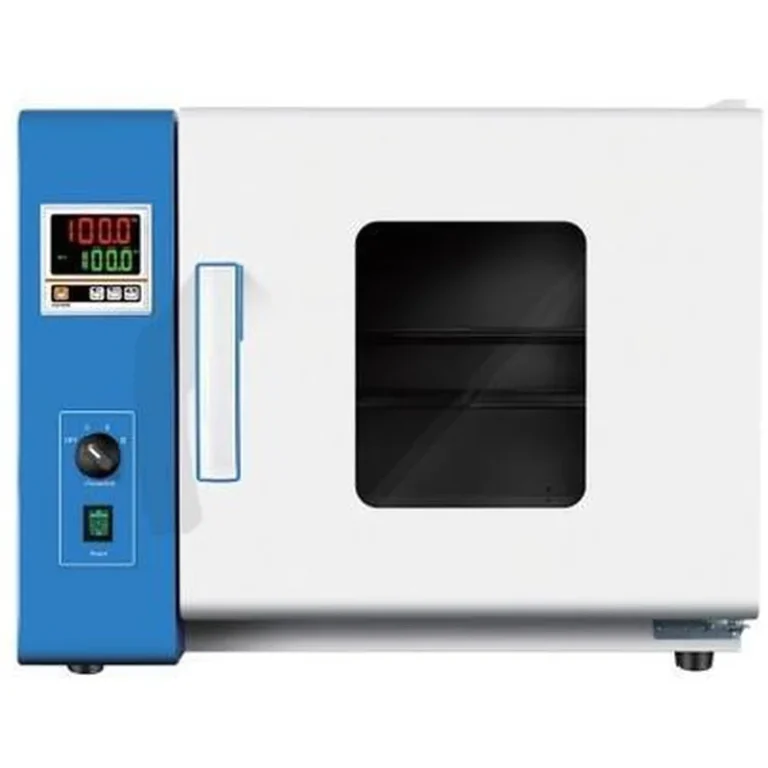
Forced air drying — RDO benchtop and RGL vertical ovens for glassware, powders and samples
45L-245L benchtop, 20L-210L vertical, up to 300°C
A lab oven is the quiet workhorse of the laboratory: glassware comes in wet and leaves dry, powders lose their moisture, adhesives cure, and metal parts let go of their stress — all inside the same stainless chamber. What separates a precision temperature oven from a kitchen box is control: PID regulation, a PT100 sensor where the sample actually sits, and uniformity you can document. That is what WSHLab builds. Our laboratory oven range covers five families: forced air drying ovens (benchtop and vertical, 20L to 245L, up to 300°C), vacuum drying ovens (<133 Pa, up to 250°C), high temperature ovens up to 500°C with Incoloy heating elements, industrial ovens from 640L to 1200L with double doors, and dry heat sterilizers for glassware and instruments. Every model carries CE certification and is built in our ISO 9001 production line in Wuhan. If you already know your temperature range, jump to the family below. If you are specifying a lab oven for the first time, start with the buying guide — it follows the same sequence our application engineers use to size an oven for a real lab bench.
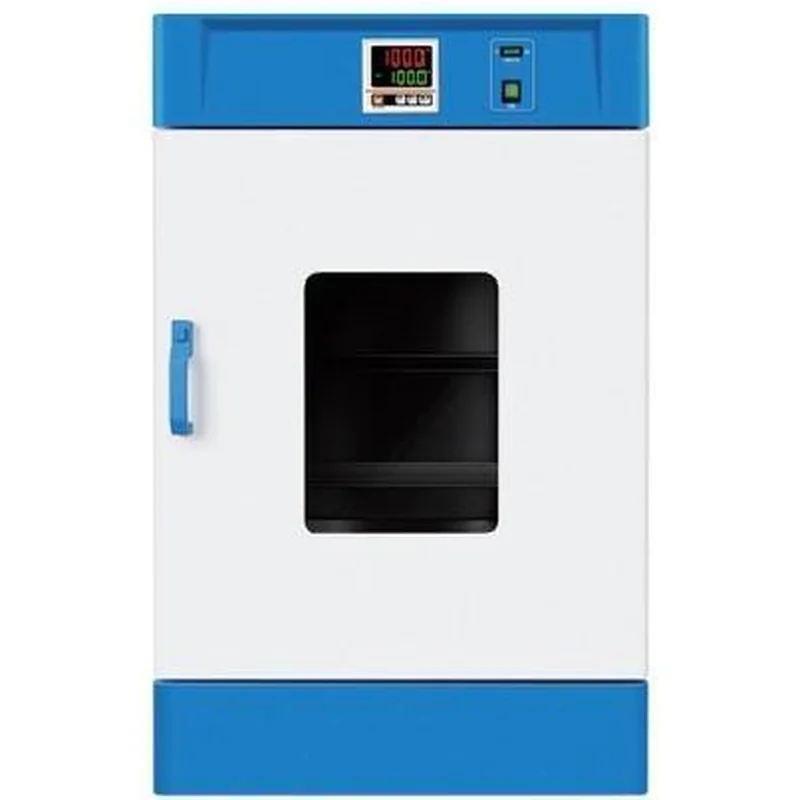
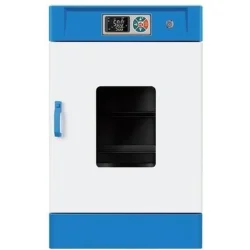
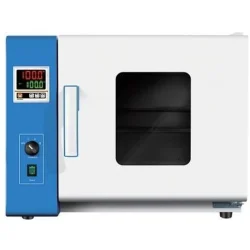
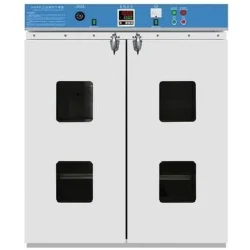
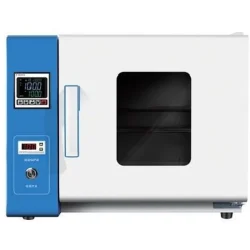
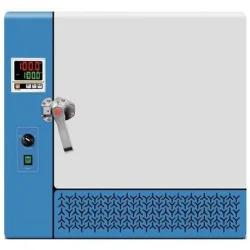
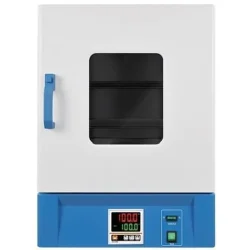
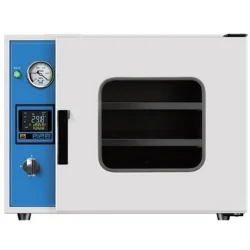
One architecture across the range: a stainless steel chamber with rounded corners, double-wall insulation, a low-noise blower where convection is needed, and a PID controller with self-tuning, timer and over-temperature protection. The differences between families are deliberate — vacuum sealing, Incoloy elements, 316L work zones — not accidents of a single design.
Five families, one documentation set — laboratories standardise on the platform and add capacity in the same format.
45L-245L benchtop, 20L-210L vertical, up to 300°C
<133 Pa, RT+10~250°C, optional nitrogen purge
Up to 500°C, Incoloy elements, 316L work zone
Double-door, truck-in shelves, up to 300°C
160°C/2h and 180°C/30min cycles, ±1°C
A laboratory oven is a temperature controlled oven engineered for repeatable thermal processes: drying, baking, curing, annealing and sterilization. Unlike a domestic appliance, a standard lab oven holds a constant temperature setpoint with PID control and a calibrated PT100 sensor, and documents it. WSHLab models run from ambient+10°C to 500°C with 0.1°C resolution.

The fastest way to the right model is to decide how heat reaches your sample. Forced air circulates hot air for speed and uniformity; vacuum lowers the boiling point of solvents for heat-sensitive work; high temperature models reach 500°C for annealing and heat treatment; industrial ovens trade bench space for capacity; dry heat sterilizers are tuned for glassware and instruments.

Product names, model numbers, SKUs and option identifiers keep quotations, orders and internal records aligned.
Heater batch, controller serial and final test data are recorded against the oven serial number, so any replacement part matches the unit it goes into.

Each oven is run and verified before packing: setpoint accuracy, uniformity mapping, timer and alarm functions, and a final electrical safety check.
You get one control philosophy, one chamber architecture and one spare-parts list from a 20L benchtop box to a 1200L production oven.
Choose the format that suits your application, workload and handling requirements.
| Type | Capacity / Option | Material / Specification | Suitable Application | Storage / Handling |
|---|---|---|---|---|
| Temperature range before capacity | By selected product | Product-specific configuration | Confirm with our team | Follow product guidance |
| Benchtop or floor-standing footprint | By selected product | Product-specific configuration | Confirm with our team | Follow product guidance |
| Forced air, vacuum or high temperature | By selected product | Product-specific configuration | Confirm with our team | Follow product guidance |
| Chamber material for your corrosion load | By selected product | Product-specific configuration | Confirm with our team | Follow product guidance |
| Certification and validation documents | By selected product | Product-specific configuration | Confirm with our team | Follow product guidance |
Ovens ship in wooden crates on pallets. Benchtop models unpack onto the bench and plug in; floor-standing models roll on casters and level in minutes.

Products frequently compared within this catalog.
Chambers, controls and build details across the five oven families.
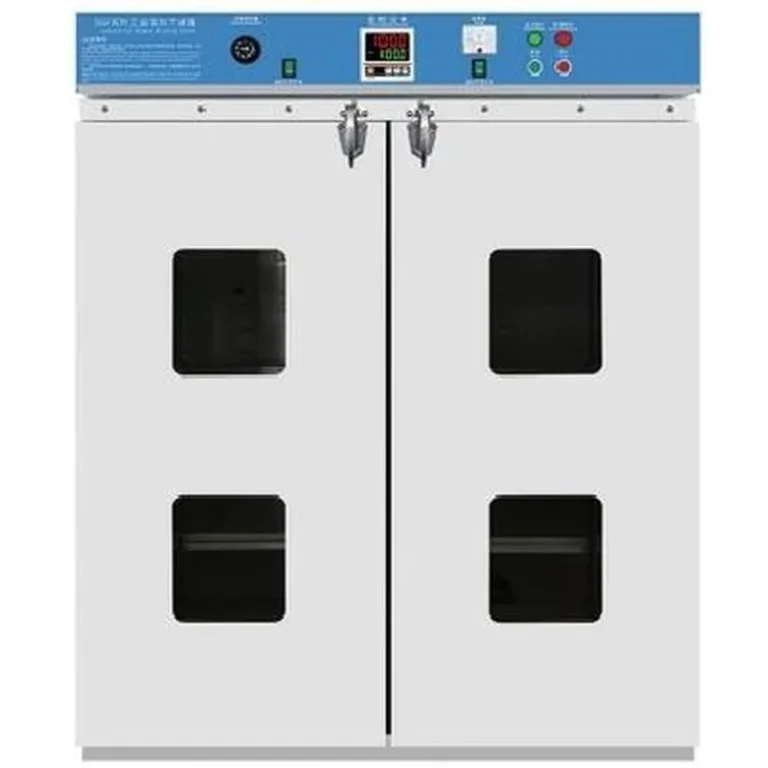
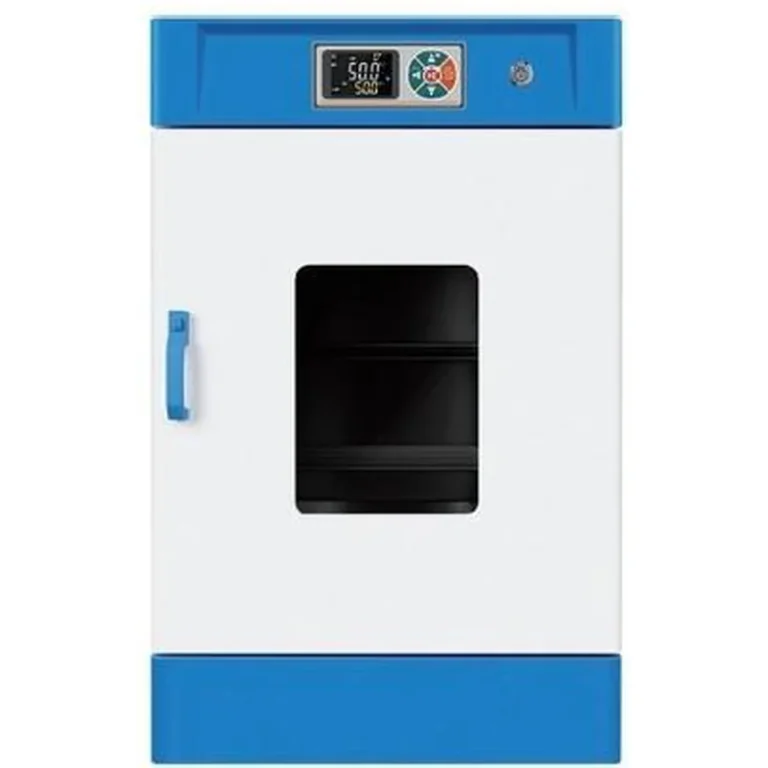
Add category-specific video covers, titles, durations and video URLs in the Videos ACF section.
The questions buyers ask most often when specifying Lab Ovens, answered by our technical team.
Forced air and industrial ovens run from RT+10°C to 300°C, vacuum ovens from RT+10°C to 250°C, and the RGW high temperature series reaches 500°C. Resolution is 0.1°C across the range, controlled by a PID loop on a PT100 sensor.
From a 20L benchtop vacuum oven to a 1200L industrial double-door oven. Popular mid-range sizes are 70L, 90L, 136L and 210L. Shelves are adjustable on every model, so plan around your real load.
Yes. RDO and RZF series are benchtop, RGL and RZFL series are vertical floor-standing cabinets, and the RGF industrial series is a full-height production oven with double doors and casters.
201 stainless steel is standard, 304 stainless is standard on C-series and all vacuum and dry heat models, and the RGW 500°C series uses a 316L stainless work zone with removable shelves.
Every oven is CE marked and built under ISO 9001. Each unit ships with a factory test report; calibration certificates and IQ/OQ documentation are available on request for regulated labs.
Send us the process temperature, the load you actually dry, and the space it has to fit. We will confirm the model, chamber material and a delivery date.