Machine shops and metalworking — annealing and stress relief of finished parts
Incoloy elements hold ±3°C at the top of range
A high temperature oven is a different machine from a drying box. Between 300°C and 500°C, stainless steel elements scale, insulation becomes the product, and a controller that drifts two percent can anneal your parts wrong. This is heat treatment territory: annealing, stress relief, powder curing, binder burn-out — processes where the result is measured after the parts cool. The WSHLab RGW series is a high temperature forced air oven built for exactly that duty. It reaches 500°C with Incoloy heating elements that survive where nichrome fails, a 316L stainless work zone with removable shelves, multi-layer insulation that keeps the exterior cool, and a PID controller with over-temperature protection on an independent circuit. Capacities run 42L, 72L, 150L and 400L. If your process tops out at 250°C or 300°C, a standard forced air oven is the economical answer — see the selection guide below. When the spec sheet says 400°C or 500°C, this is the series you quote.
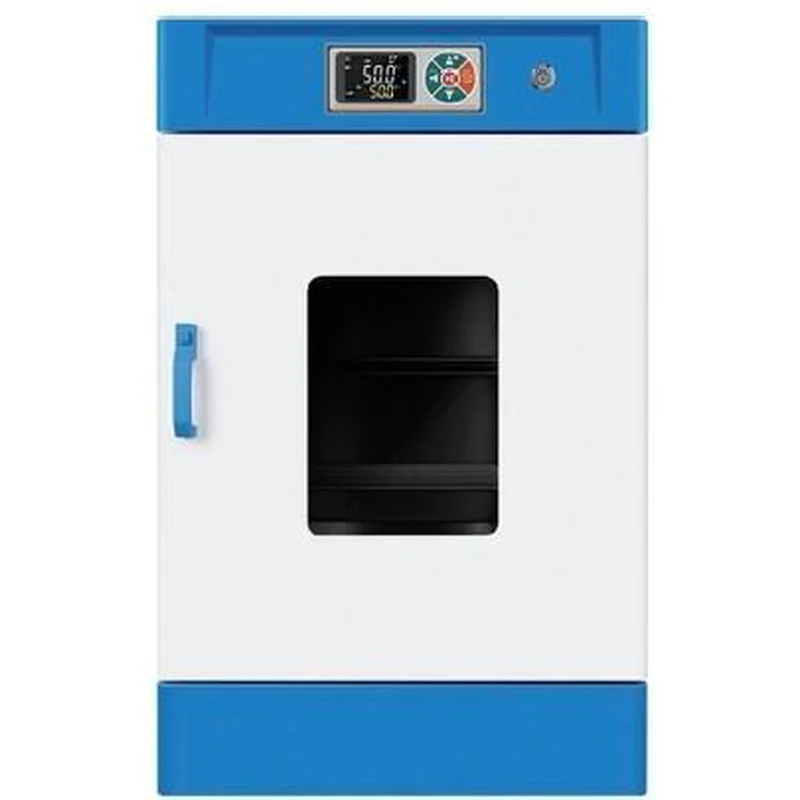
A double-layer insulated chamber with a 316L stainless work zone, Incoloy-sheathed elements, a high-speed centrifugal blower and a latch handle that stays closed at 500°C.
Heat treatment, curing and preheating processes that a 300°C oven simply cannot reach.
Incoloy elements hold ±3°C at the top of range
316L work zone resists process fumes
Independent over-temp circuit protects the load
400L model takes full trays
By convention, a high temperature laboratory oven works above the 300°C ceiling of a standard drying oven, running 400°C or a 500°C oven class. The engineering changes throughout: Incoloy-sheathed elements instead of bare wire, a 316L work zone instead of coated steel, and insulation thick enough that the outside stays touch-safe at full temperature.

Four sizes cover the bench to the bay: RGW-42D for laboratory work, 72D and 150D for shared R&D duty, and the 400L RGW-400D for sintering trays and full-size fixtures. Heaters scale from 2000W to 7500W, and every model keeps the same control layout.

Product names, model numbers, SKUs and option identifiers keep quotations, orders and internal records aligned.
Element batch, sensor serial and the 500°C test cycle are filed against the oven serial, so replacement elements match the watt density of the originals.

Every RGW runs a full-range cycle to 500°C before packing, with uniformity, alarm and seal checks documented by serial number.
Every component in the RGW was chosen for 500°C continuous duty — element metallurgy, seal compound, insulation depth and handle design.
Choose the format that suits your application, workload and handling requirements.
| Type | Capacity / Option | Material / Specification | Suitable Application | Storage / Handling |
|---|---|---|---|---|
| Maximum temperature with a real margin | By selected product | Product-specific configuration | Confirm with our team | Follow product guidance |
| Heating element metallurgy | By selected product | Product-specific configuration | Confirm with our team | Follow product guidance |
| Insulation and exterior surface temperature | By selected product | Product-specific configuration | Confirm with our team | Follow product guidance |
| Uniformity at the top of the range | By selected product | Product-specific configuration | Confirm with our team | Follow product guidance |
| Work-zone alloy for the process atmosphere | By selected product | Product-specific configuration | Confirm with our team | Follow product guidance |
High-temperature ovens need power headroom and clearance more than anything: check the circuit ampacity against the heater wattage before delivery day.

Products frequently compared within this catalog.
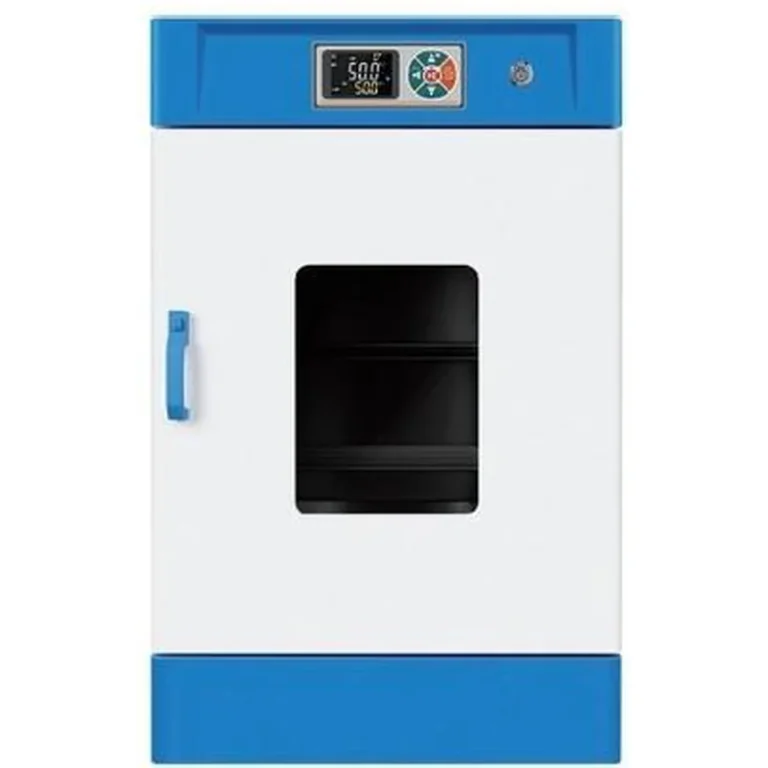
Work zone, element and control details of the 500°C series.
Add category-specific video covers, titles, durations and video URLs in the Videos ACF section.
The questions buyers ask most often when specifying High Temperature Ovens, answered by our technical team.
500°C, with a working range of RT+5°C to 500°C and 0.1°C resolution. The controller is PID with an independent over-temperature protection circuit.
Yes — Incoloy-sheathed elements are standard on the RGW series, chosen specifically for continuous 400°C+ operation where ordinary elements oxidise and fail.
Forced convection keeps the work zone within ±3°C at 500°C, verified on the blower-driven loop with the PT100 sensor placed in the working volume.
RGW-42D (42L), RGW-72D (72L), RGW-150D (150L) and RGW-400D (400L), with interior heights from 400 mm to 850 mm and two removable shelves rated at 15 kg each.
Multi-layer insulated double-wall construction keeps the shell safe to touch at full setpoint — the same door handle you use at 200°C you still use at 500°C.
Send us the process temperature, the cycle profile and the part dimensions. We will confirm the size, the circuit requirements and the lead time.